长城
Nanjing Massacre memorial hall receives new evidence of Japanese invasion on 81st anniversary of Japan’s surrender_我的网站

A |
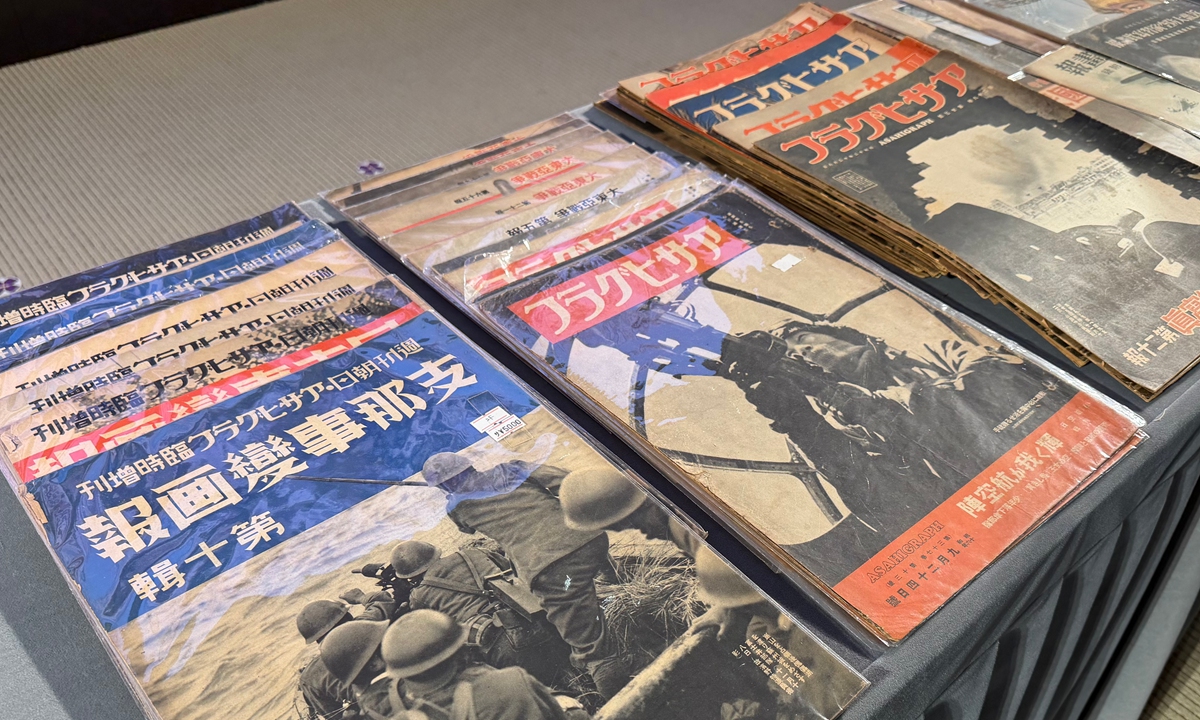
Illustrated materials related to Japan’s invasion of China, brought back from Japan by Marcus Detrez and Zhong Haosong, are displayed at the Memorial Hall of the Victims in Nanjing Massacre by Japanese Invaders in Nanjing, East China’s Jiangsu Province, on August 15, 2026. Photo: Shen Sheng/GT
August 15 this year marks the 81st anniversary of Japan’s unconditional surrender in World War II. A ceremony themed “Nanjing Will Never Forget” was held on Saturday at the Memorial Hall of the Victims in the Nanjing Massacre by Japanese Invaders in Nanjing, East China’s Jiangsu Province.
At the ceremony, a batch of newly acquired artifacts, historical materials, and documents related to the War of Resistance Against Japanese Aggression, including Japanese soldiers’ private letters, wartime postcards, educational materials on gas warfare, news compilations and French diplomatic archives, was officially added to the memorial hall's collection.
Overseas‑sourced historical archives drew wide attention among the donated materials. French youth Marcus Detrez, his compatriot Bastien Rata and Chinese youth Zhong Haosong jointly donated a set of historical documents on Japan’s aggression against China from the French diplomatic archives in Nantes, as well as Japanese‑language materials they had collected in Japan.
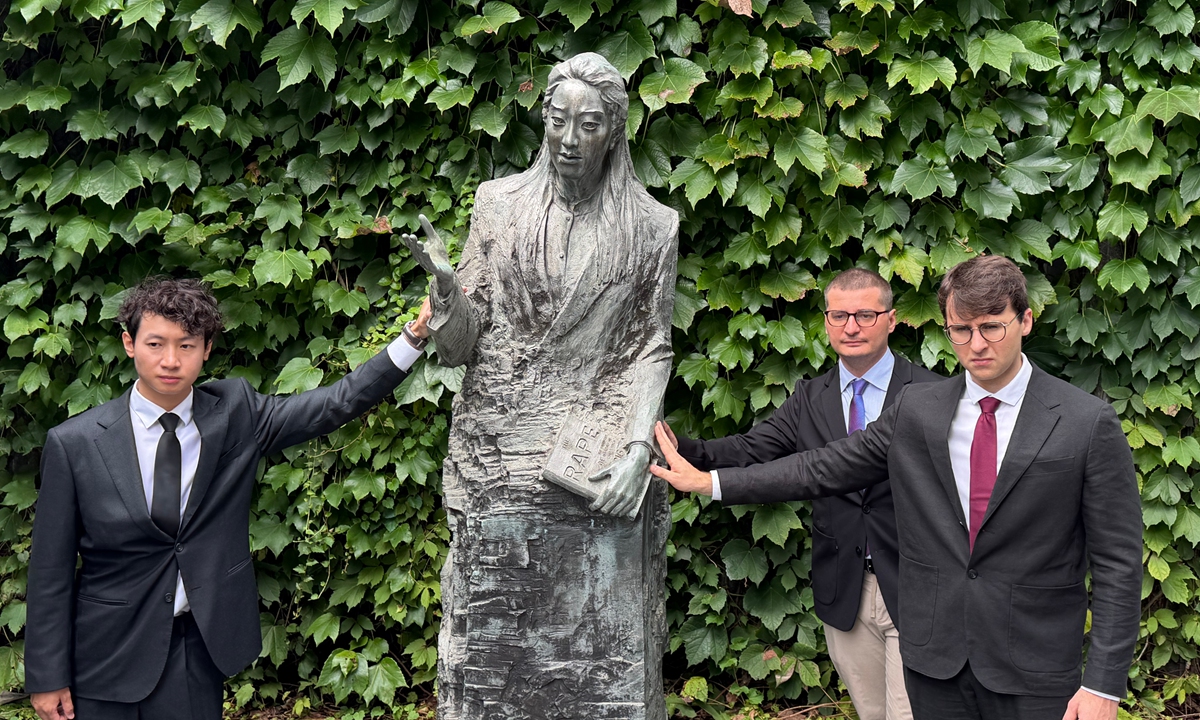
Zhong Haosong (left), Bastien Rata (center) and Marcus Dretz (right) visit the Memorial Hall of the Victims in Nanjing Massacre by Japanese Invaders in Nanjing, East China’s Jiangsu Province, on August 15, 2026. Photo: Shen Sheng/GTAccording to Bastien, the French diplomatic archives brought back this time total 891 pages. They are organized by province and cover wartime historical events in Nanjing, Shanghai, Guangdong and other areas. The archives document relevant situations during Japan’s invasion of China, while also preserving observations by French diplomatic personnel on Chinese society during the wartime period.
Marcus told Global Times on Saturday that, through these archives and related research, they have gained a deeper understanding of the brutality of the Nanjing Massacre. He said that collecting these materials was also aimed at conducting more educational work to help more people learn about this period of history.
The materials brought back from Japan by Zhong include albums of documentary paintings of the Japanese invasion of China by artists accompanying the invading Japanese army, privately taken photo albums of the invading Japanese troops, and original publications from the same period, including the Asahi Shimbun. These materials all come from original Japanese records.
The overseas historical materials were collected over an extended period. Zhong said they contacted sources online and searched through antique and secondhand book channels while continuing to collect materials in Japan.
The new collection on Saturday also includes materials gathered by Chinese youths. High school student Yu Ningpeng and Xu Weizhe donated 12 private letters written by a soldier of the 20th Regiment of the Imperial Japanese Army’s 16th Division, documenting his experiences during the invasion of China. One letter, dated December 20, 1937, contains accounts related to the Japanese occupation of Nanjing.
Meng Guoxiang, a researcher at the Institute for National Memory and International Peace Studies, told the Global Times at the event on Saturday that historical research places great importance on the sources of historical materials, with original archives holding significant value.
Some of the materials donated this time were records left by the perpetrators themselves, while archives from third-party countries such as France provide another perspective, Meng said, adding that cross-checking materials from different sources can help build a more complete body of evidence.
Notably, alongside the handover of the latest batch of archival materials, the memorial hall also held a ceremony to induct the fifth group of inheritors of the historical memory of the Nanjing Massacre. Six people were named as the latest inheritors, including descendants of Nanjing Massacre survivors, descendants of eyewitnesses, and descendants of international friends. They help pass on historical memory through family traditions, educational activities and efforts to raise public awareness of history.
In recent years, a growing number of post-1990s and post-2000s private collectors, as well as foreign nationals, have joined efforts to collect historical materials, a trend that has deeply moved and impressed Zhou Feng, curator of the Memorial Hall of the Victims in Nanjing Massacre by Japanese Invaders, he told the Global Times.
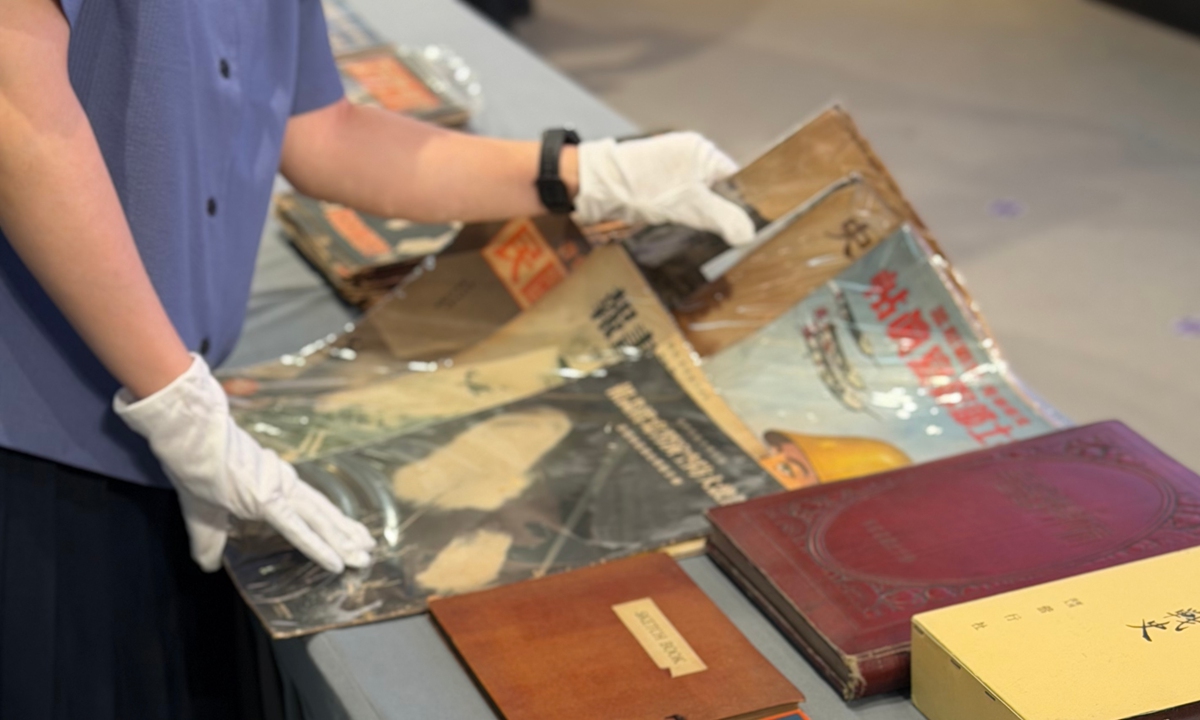
A staff member arranges archival materials documenting Japan’s invasion of China brought back from Japan by Marcus Detrez and others at the Memorial Hall of the Victims in Nanjing Massacre by Japanese Invaders in Nanjing, East China’s Jiangsu Province, on August 15, 2026. Photo: Shen Sheng/GT
Zhou said that preserving history and historical records was once widely seen as the responsibility of museums, cultural institutions and professional scholars; however, today, more and more private collectors are taking the initiative, spending their own money to collect historical materials scattered across China and overseas.
Historical memory, he said, needs to be passed down from one generation to the next. The donors come from different generations, nationalities and backgrounds, but share a common respect for historical truth and commitment to justice.
Since the beginning of this year, the memorial hall’s Nanjing Massacre Documents Center has launched a global campaign to collect relevant historical materials, receiving support from various sectors both in China and abroad. Nearly 100 donors from China and overseas have so far contributed materials to the memorial hall, Zhou said.
。 /사진=게티이미지뱅크중국에서 15일 동안 물만 마시는 극단적인 다이어트를 시도한 30대 여성이 심각한 뇌 질환을 앓게 됐다는 소식이 전해졌다.25일 홍콩 사우스차이나모닝포스트(SCMP)에 따르면 중국 허난성에 거주하는 31세 여성 A씨는 최근 극단적인 단식 이후 건강에 이상이 생겨 병원을 찾았다.키 160㎝에 약 70㎏이었던 A씨는 15일 동안 음식물을 전혀 먹지 않고 물만 마시는 방법으로 약 20㎏을 감량했다. 극단적인 다이어트 방법으로 체중은 20㎏이나 줄었지만, 이후 보행 장애와 기억력 저하가 나타난 것.A씨를 진료한 정저우대 제1부속병원 신경과 쑨구이팡 교수는 A씨에게 베르니케 뇌병증이 발생했다고 진단했다.베르니케 뇌병증은 영양 결핍, 특히 비타민 B1 등의 결핍과 관련해 발생하는 심각한 뇌 질환으로, 혼란과 보행 및 균형 장애, 안구 운동 이상, 기억력 저하 등의 증상이 나타날 수 있다.의료진에 따르면 A씨는 걷는 모습에도 이상이 나타났다. 쑨 교수는 그의 걸음걸이가 "펭귄과 비슷했다"면서 이 증상이 완전히 회복되지 않을 가능성도 있다고 말했다.A씨가 이 같은 극단적인 단식을 시작한 이유는 중국 전통 도교의 수행법 가운데 하나로 알려진 '벽곡(辟穀·bigu)'을 실천하기 위해서였다.벽곡은 말 그대로 '곡식을 피한다'는 의미로 음식 대신 우주를 순환하는 생명 에너지인 '기(氣)'를 섭취하면 초월적인 경지에 이를 수 있다는 믿음과 관련이 있다.최근에는 전통 수행법이라는 의미를 넘어 체중 감량이나 해독을 위한 방법으로 이를 따라 하는 사람들이 생겨났다.앞서 2020년 중국 헤이룽장성에서는 26세 남성이 52일 동안 물만 마신 뒤 사망했고, 사망 이틀 전에는 치매와 유사한 증상까지 나타난 것으로 알려졌다.또 지난해 저장성의 한 여성은 일주일 동안 물과 이른바 '에너지 알약'만 섭취해 약 5㎏을 감량했지만, 이후 장 점막이 심각하게 손상됐고 혈액에 세균이 침투하는 감염으로 이어졌다.이 같은 사례가 이어지면서 온라인에서 벽곡 관련 콘텐츠를 제한하거나 금지해야 한다는 목소리도 나오고 있다고 SCMP는 전했다.이보배 한경닷컴 객원기자
[email protected]。

B |
Current article:http://wdqk0.cuozubeishenjingli.cfd/ykc3ntl/20260826/834510.html
Published on:16:25:30

 微信
微信 移动端
移动端